
Seasonal guide · 6 min read
Your Montclair Sub-Zero before fire season: a hillside summer checklist
Eucalyptus debris, dry-season dust and warm Oakland Hills afternoons all stress a built-in Sub-Zero. A short, practical pre-summer checklist for Montclair homes.
Montclair sits up in the Oakland Hills, and summer here behaves nothing like the flats below. By July the marine fog that cools the rest of the East Bay often burns off early, leaving warm, dry afternoons, fine airborne dust, and a steady fall of eucalyptus and bay-laurel debris around every hillside home.
Those conditions quietly work against a built-in refrigerator. A few minutes of attention before the dry season peaks is the cheapest insurance a Montclair owner can buy — and in fire country, a fridge that runs cool and clean is one less thing drawing hard on the panel.
Clear the condenser before the dust settles in
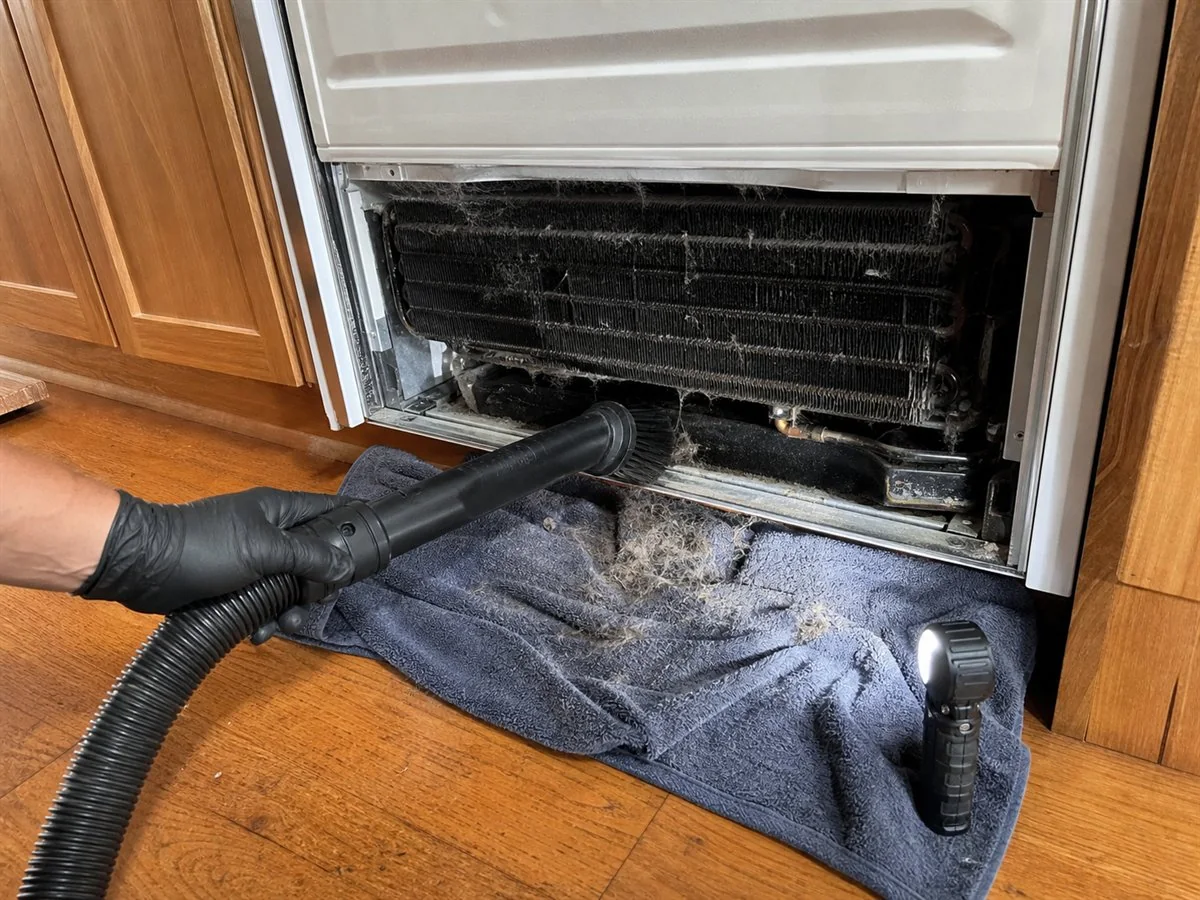
A built-in Sub-Zero sheds heat by pulling room air across a condenser coil, usually behind the upper or lower grille. Up here that intake air is full of dry-season dust and the fine particulate that drifts off the eucalyptus and pine common along the Montclair ridgelines. The coil packs with it faster than it would in a coastal kitchen.
A loaded coil forces the compressor to run longer and hotter, exactly when the kitchen is already warm. Pull the grille, vacuum the coil and the fan area, and you give the unit back the headroom it needs to hold temperature through an 85-degree afternoon. Do it in late spring and you are set for the season.
Check the door seal against warm-afternoon load
Hillside kitchens swing through a wide daily temperature range — cool foggy mornings, warm dry afternoons. That cycling is hard on door gaskets, which expand, contract and slowly lose their grip. Close a door on a dollar bill and tug: if it slides out with no resistance at several points around the frame, the seal is letting warm air leak in and making the compressor work overtime. A gasket is a bounded, affordable fix and well worth doing before the hottest weeks.
Mind the electrical picture in fire season
Public-safety power shutoffs and the occasional hillside outage are a real part of summer in the Oakland Hills. A built-in that is already straining against a dusty coil and a tired gasket draws more current and recovers more slowly after a power event. Keeping it clean and well-sealed is not just about food — it keeps the unit's draw modest and its restart gentle when the grid comes back. If your Sub-Zero throws a fault code after an outage, note it and call rather than repeatedly power-cycling it.
FAQ
Questions & answers
When in the year should I do this in Montclair?
Late spring — May into June — before the dry season peaks and the fog stops cooling the hills in the afternoon. That timing gets the unit clean and sealed ahead of the hottest, dustiest weeks.
Does the eucalyptus debris really reach the fridge?
Not the leaves themselves, but the fine dust and pollen they shed travels easily on dry hillside air and into a kitchen's circulation, where the condenser intake collects it. It is a real factor in how quickly coils load up here.
Can I clean the condenser myself?
The grille area, yes — power down, pull the grille, and gently vacuum the visible coil and fan. If you find oily buildup, frost, or the unit still runs warm afterward, that points to something beyond cleaning and is worth a diagnostic visit.
Go deeper
More Oakland & Montclair guides
Warm-Drawer Faults in Sub-Zero Undercounter Units: A Montclair Care Guide
Why Sub-Zero undercounter and drawer units run warm in Montclair hillside pantries: sealed-system, airflow, gasket and ice-maker faults, ranked by urgency.
Read the guide → Post-Outage Restart · 6 minSub-Zero Not Cooling After a Power Outage? A Montclair Restart Guide
Power is back but your Sub-Zero won't cool or restart in Montclair? Learn why the board and compressor need time, what to check, and when a surge did damage.
Read the guide → Wine storage · 6 minWhen a Sub-Zero wine column drifts warm in the Oakland Hills
Dual-zone drift, a tired sensor, a loaded condenser or a leaking UV-glass seal — what actually goes wrong in a Sub-Zero wine storage unit, and how it's fixed in Montclair homes.
Read the guide →Rather leave it to a specialist?
Have the failing compartment and model number ready, and you will get a real first opinion — not a sales pitch.