
Wine storage · 6 min read
When a Sub-Zero wine column drifts warm in the Oakland Hills
Dual-zone drift, a tired sensor, a loaded condenser or a leaking UV-glass seal — what actually goes wrong in a Sub-Zero wine storage unit, and how it's fixed in Montclair homes.
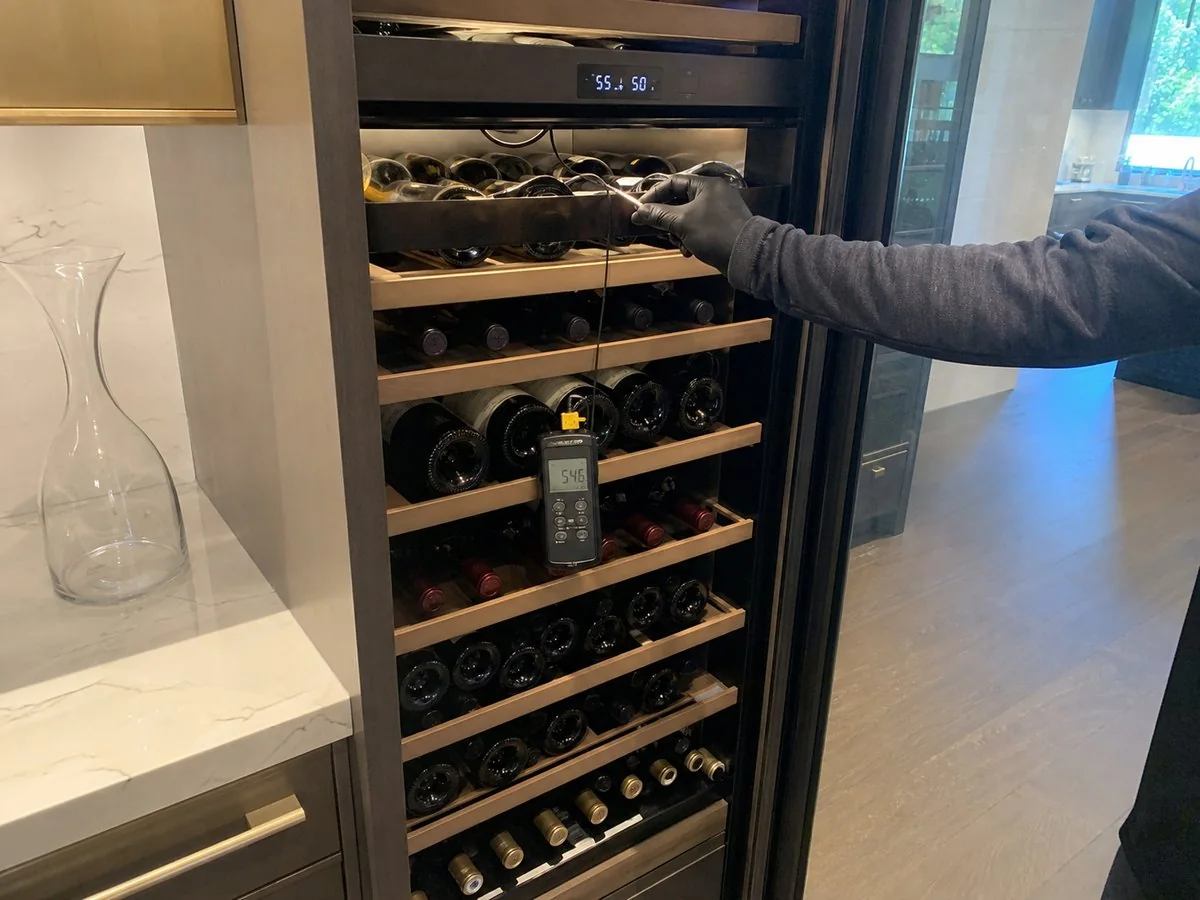
A Sub-Zero wine column is a very different machine from the kitchen refrigerator next to it. Its whole job is stillness — holding a tight, even temperature, damping vibration, and shielding the bottles from light so a cellar's worth of wine can age the way it was meant to. So when a Montclair owner tells us the reds are reading two degrees warm or the lower zone won't hold its setting, it usually points to one of a handful of specific, fixable faults rather than a dying unit.
Up in the Oakland Hills, where built-in wine storage is common in the estate kitchens above Mountain Boulevard and tucked into hillside dining rooms, a few local realities shape which of those faults we see most.
Dual-zone drift: the most common call
Most built-in Sub-Zero wine units run two independent zones — a cooler band for whites and sparkling, a warmer one for reds — each governed by its own sensor and damper. The usual complaint is that one zone slowly drifts off its target. When a thermistor (the small temperature sensor) ages or reads erratically, the control faithfully cools to the wrong number, and a 55°F red zone quietly settles at 60 or chases up and down. We measure each zone against a calibrated reference before touching a part, because a sensor or a stuck damper is a clean, bounded fix — and that distinction is the whole point of a real diagnosis rather than a parts swap.
A warm-drifting zone can also be airflow, not electronics. The evaporator fan that moves chilled air across the zones can weaken or ice up, and the result reads on the display as a stubborn zone that never quite reaches setpoint.
Why the Oakland Hills load these units harder
A wine column sheds its heat through a condenser the same way the kitchen Sub-Zero does, and the hillside air here is hard on it. Dry-season dust and the fine particulate that drifts off the eucalyptus and bay laurel along the Montclair ridgelines pack the condenser coil, and a loaded coil makes the sealed system work longer and warmer — which shows up first as a zone that can't hold temperature on an 85-degree afternoon. Pulling the grille and clearing the coil is often the single most useful thing an owner can do.
Two more seals matter on a wine unit specifically. The door gasket has to hold against the same cool-morning-to-warm-afternoon swing the rest of these hillside kitchens see, and the UV-treated glass door is doing real work shielding the bottles from light; a tired gasket or a failing glass seal lets warm air and light in and forces the compressor to chase. Both are defined, affordable repairs.
Vibration, sediment, and the repair-vs-replace line
Wine storage cares about something a food refrigerator never does: stillness. A worn fan bearing or a compressor mount that has started to transmit vibration won't spoil a bottle overnight, but over months it disturbs the sediment in older reds and undoes the cellaring you paid for. If a unit has begun to hum or buzz where it used to be silent, that is worth diagnosing early.
As for repair versus replace: a sensor, a damper, a fan, a gasket or a glass seal on an otherwise sound Sub-Zero wine unit is almost always worth fixing — these are built to run well past a decade. The one place we'll show you the numbers and sometimes counsel replacement is a sealed-system failure: a refrigerant leak or a failing compressor on an older unit. We put gauges on it, show you the pressures and the age, and let the evidence decide. Every visit starts at our $89 diagnostic, credited toward the repair, and the work is backed by our 365-day parts-and-labor warranty. Book by phone at (510) 390-9712 or online — no email funnel, no pressure.
FAQ
Questions & answers
My white zone is fine but the red zone runs warm — is the whole unit failing?
Almost never. Independent zones mean an independent fault: usually a drifting sensor, a stuck damper or weak airflow on that one zone. We measure each zone against a calibrated reference and replace only what the readings call for.
Does the eucalyptus dust in the hills really affect a wine cooler?
Indirectly but really — the fine dry-season particulate that drifts off the hillside trees collects on the condenser coil, and a loaded coil is a common reason a zone stops holding temperature on warm afternoons. Clearing the grille and coil is a worthwhile first step.
Is a Sub-Zero wine unit worth repairing, or should I replace it?
Sensors, fans, dampers, gaskets and the door's glass seal are bounded repairs that are clearly worth doing on a unit built to last well over a decade. The exception is a sealed-system leak or compressor failure on an older unit, where we show you the pressures and the age and let you decide.
Go deeper
More Oakland & Montclair guides
Warm-Drawer Faults in Sub-Zero Undercounter Units: A Montclair Care Guide
Why Sub-Zero undercounter and drawer units run warm in Montclair hillside pantries: sealed-system, airflow, gasket and ice-maker faults, ranked by urgency.
Read the guide → Post-Outage Restart · 6 minSub-Zero Not Cooling After a Power Outage? A Montclair Restart Guide
Power is back but your Sub-Zero won't cool or restart in Montclair? Learn why the board and compressor need time, what to check, and when a surge did damage.
Read the guide → Seasonal guide · 6 minYour Montclair Sub-Zero before fire season: a hillside summer checklist
Eucalyptus debris, dry-season dust and warm Oakland Hills afternoons all stress a built-in Sub-Zero. A short, practical pre-summer checklist for Montclair homes.
Read the guide →Rather leave it to a specialist?
Have the failing compartment and model number ready, and you will get a real first opinion — not a sales pitch.