Skip to content
Montclair Built-In Technicians logo markMontclair Built-In TechniciansSub-Zero Built-In Repair · Montclair Oakland Hills
Rated 4.9 / 5From Montclair & Oakland Hills Sub-Zero owners
Model and serial verified onsite Cabinet-safe built-in access Written estimate after diagnosis

Symptom guide · Not cooling

Your Sub-Zero is not holding temperature

Straight answer In Montclair, the most useful split is freezer-cold-fridge-warm versus both-warm. The first usually means airflow — a fan, frost or damper. The second can mean a sealed-system suspicion that needs EPA-certified verification, which we never guess at. We read temperatures, check the condenser and evaporator, and tell you which path you are on before quoting.

Diagnostic ~$135–$205 (estimate), credited toward the repair.

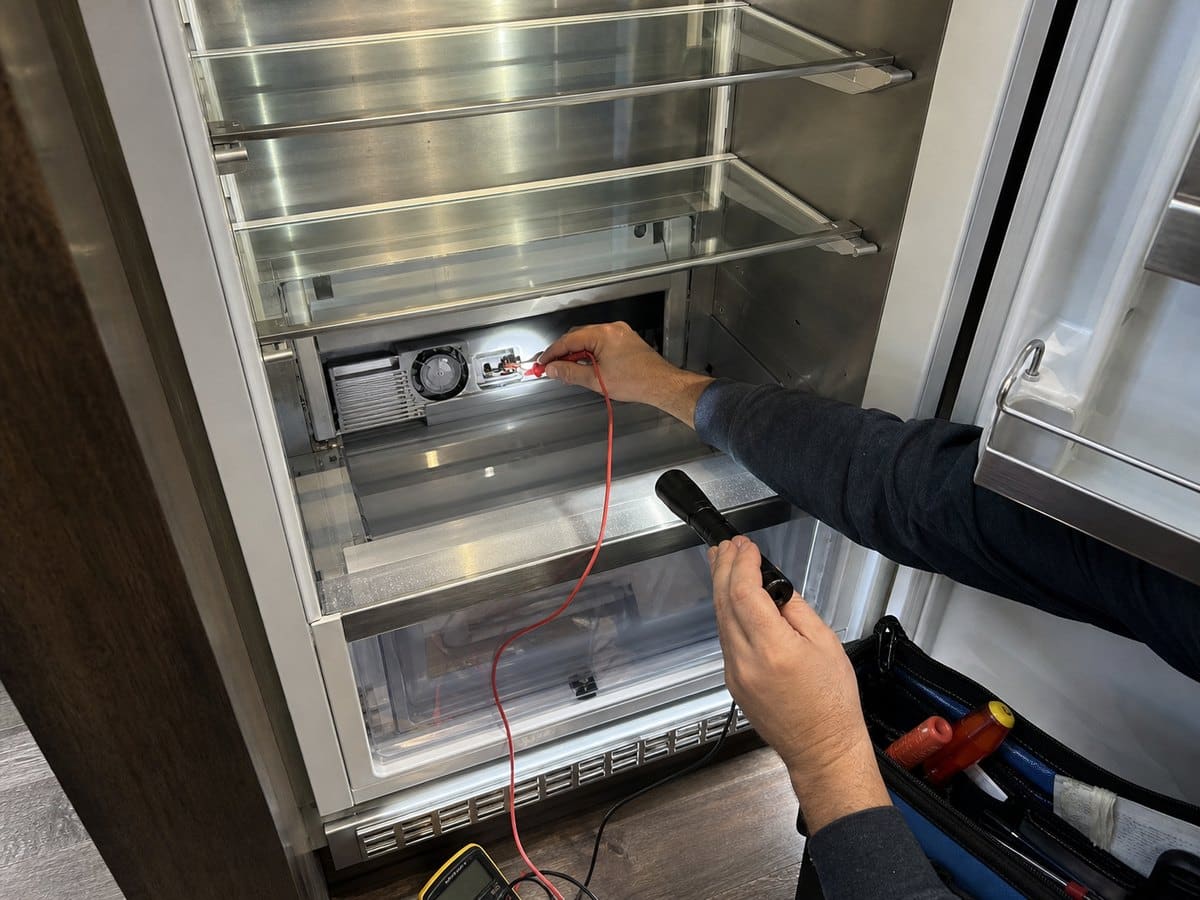
Technician checking the interior airflow path of a built-in refrigerator
Cold freezer, warm fridge points to airflow or a single-evaporator path — not automatically a dead unit.

How owners notice it

Normal vs abnormal — and when to stop

A healthy Sub-Zero fresh-food section sits near 37°F and the freezer near 0°F, cycling quietly. The early warning of a condenser coil packed with dust or pet hair is subtle: longer run times, a warmer-than-usual fridge on hot afternoons, and a grille that feels hot to the hand. That is abnormal even if food still seems cold. If the fresh-food side climbs past the mid-40s, or both compartments warm together, stop trusting the unit with perishables and book a diagnosis — continuing to run a starved or leaking system is how a $445 repair becomes a sealed-system job.

One limitation worth stating: a warm fridge with a cold freezer also describes built-in cabinet removal/reseat risk cases where a prior service left a unit slightly out of level, pinching airflow or a door — but we cannot know whether the cabinet fit is part of the problem until we see how the unit sits in its opening.

From simple to expensive

Ranked causes

  1. 1. Dirty condenser coil

    Signs
    Hot grille, long run times, fridge slips on warm days.
    Test
    Visual on the coil plus head-temperature reading.
    Typical repair
    Clean and verify airflow; recheck temps over a cycle.
  2. 2. Evaporator fan failure

    Signs
    Freezer fine, fridge warm, little air at the vents.
    Test
    Fan operation and current draw; evaporator temp.
    Typical repair
    Replace the fan; confirm fresh-food recovery.
  3. 3. Frosted evaporator / defrost fault

    Signs
    Gradual warming, ice build behind the rear panel.
    Test
    Inspect coil frost, defrost heater and termination.
    Typical repair
    Clear frost, repair the defrost component, retest.
  4. 4. Stuck damper / control

    Signs
    One compartment off-target while the other holds.
    Test
    Damper movement and control signal.
    Typical repair
    Free or replace the damper; verify zone temps.
  5. 5. Sealed system / compressor

    Signs
    Both compartments warm, compressor hot or silent.
    Test
    Pressure and temperature behavior (EPA-certified).
    Typical repair
    Confirmed leak or compressor work — quoted separately.

Local context

Why the hills matter here

The wooded canyon pattern around Montclair loads condensers differently from a flatland kitchen: dust, pollen, pet hair and seasonal smoke collect behind grilles and slow temperature recovery. In Berkeley's flatter, slightly warmer pockets we often see heavier dust; up in Orinda, past the tunnel, drier inland heat pushes compressors harder in summer, so a marginal coil shows up as a warm fridge sooner. Piedmont homes, with their older built-ins in tight cabinetry, tend to bring the airflow-and-reseat version of this fault. None of that changes the test sequence — it changes which cause we suspect first.

Photo proof

What we document

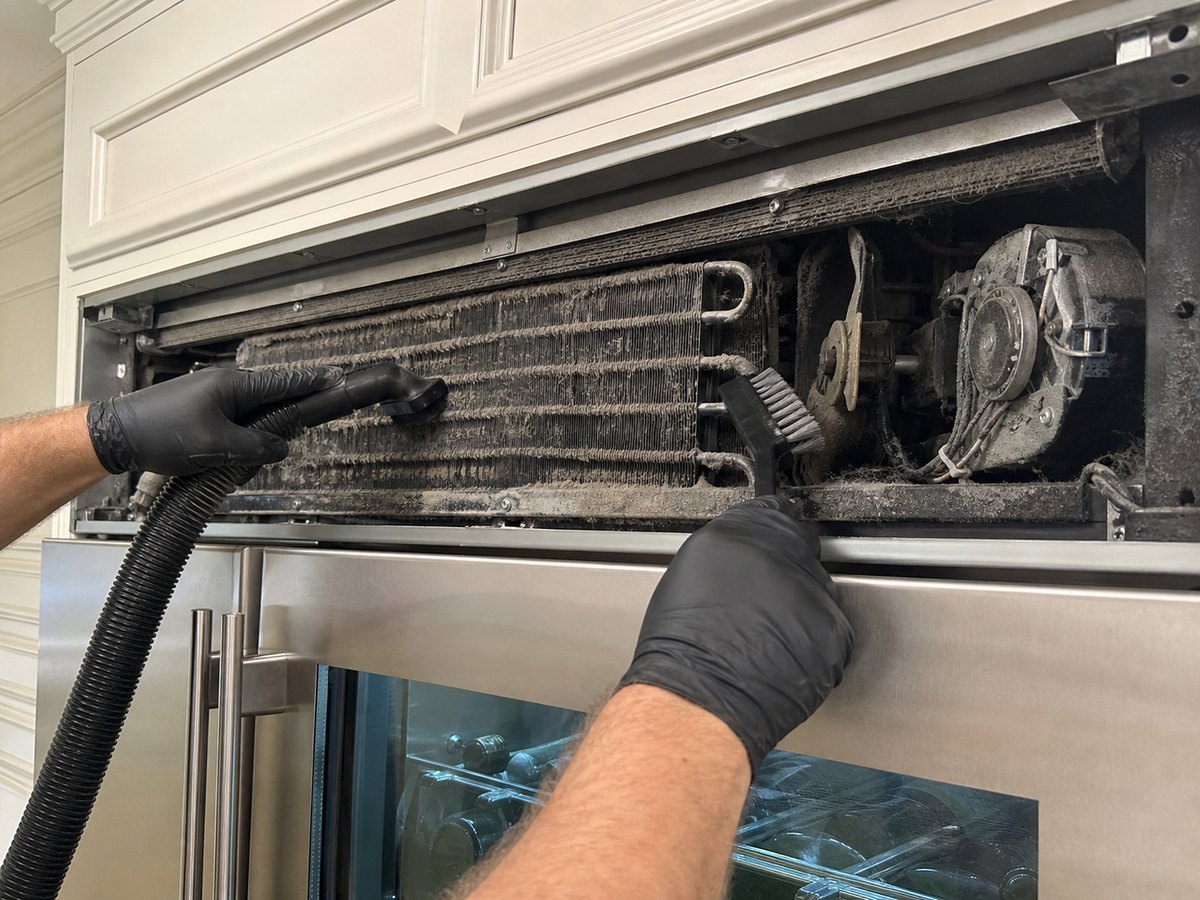
Restricted condenser coil close-up before cleaning
Close-up of the failure point: a coil starved of airflow by debris — the before image for a cleaning.
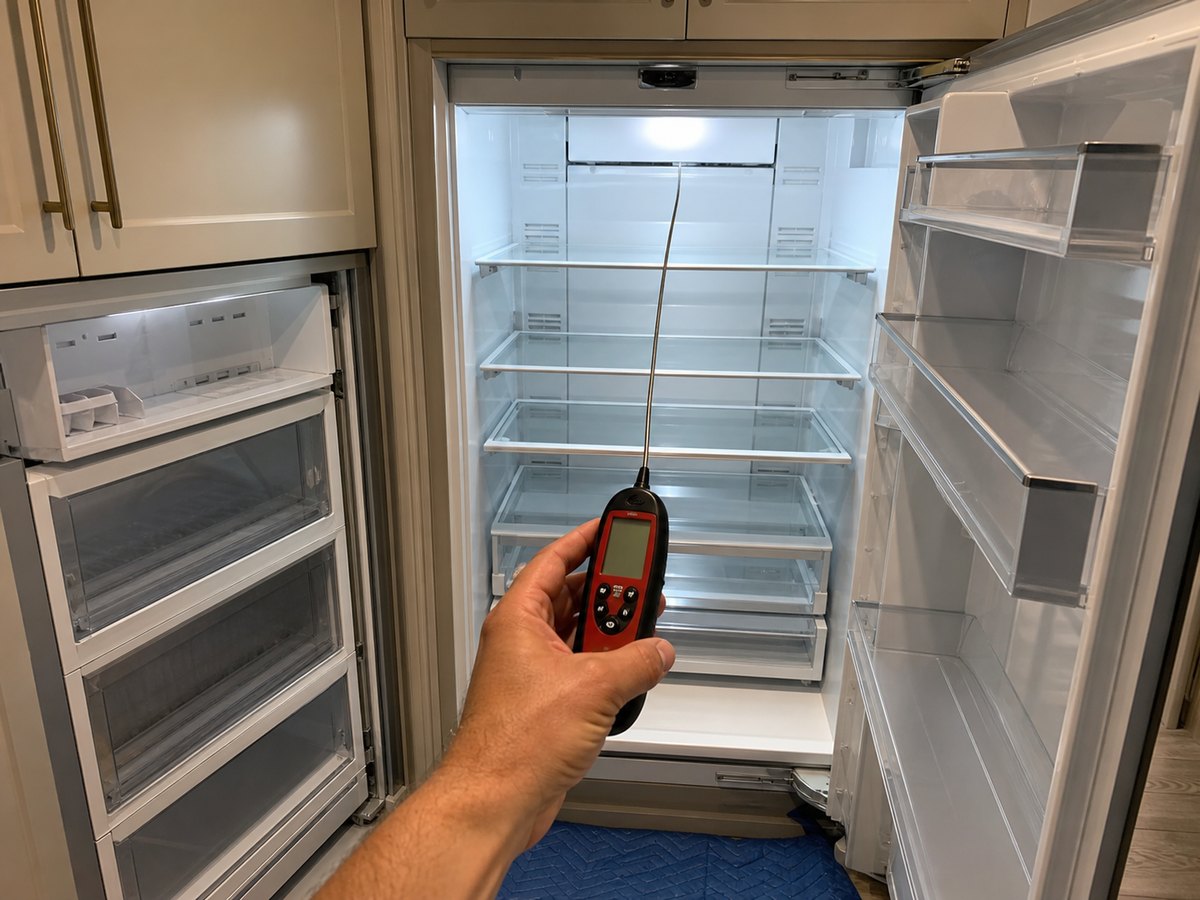
Probe thermometer showing verified temperatures after refrigerator repair
Wider context: verified temperatures holding after the fix — the diagnosis closed on numbers.

Not-cooling questions

FAQ

Fridge is warm but the freezer is cold — what is it usually?

On a built-in Sub-Zero that pattern points to airflow rather than the sealed system: a failed evaporator fan, a coil frosted over, or a damper that is not opening to the fresh-food side. Temperatures at the evaporator confirm which one before any quote.

Should I keep using it while it is warm?

Move perishable food out of the warm compartment and keep the doors closed. If both sides are warming or you hear the compressor running nonstop, stop relying on it and call — running a starved or leaking system longer can turn a part-level repair into a sealed-system one.

Can a dirty condenser really cause this?

Yes. In the foggy Oakland Hills a coil packed with dust and pet hair is the single most common preventable cause. It makes the compressor run hot and long and can mimic a refrigerant problem. We read head temperatures to tell the difference instead of guessing.

Will you have the part on the truck?

Often, for common evaporator fans and dampers across the 500/600/BI lines. Ask for parts availability before the visit and give us the model number so we can load the right revision — it is the best way to finish in one trip.

What first readings matter for a 94611 not-cooling call?

Record the fresh-food temperature, freezer temperature, set points and whether the fan runs after the door switch is closed. Fresh-food above 44°F while the freezer is near 0°F usually starts with airflow, damper, frost or gasket evidence rather than a compressor quote.

Can smoke-season dust make a not-cooling call look worse?

Yes. Fine smoke and hillside dust can load the condenser enough to cause long run times and slow recovery. That can look like sealed-system trouble until the coil, condenser fan and temperature recovery are checked after airflow is restored.

Primary Sub-Zero repair → · Sealed system & compressor →

Reviews

Not-cooling repair evidence from hill kitchens

★★★★★

Our BI-36 fresh-food side hit 48°F while the freezer stayed at 0°F. The technician found a stalled evaporator fan, installed the matched motor and verified 37°F after a full cycle. The visit took 2 hours and cost $642, exactly inside the airflow range.

Homeowner, Montclair Village

★★★★★

The refrigerator warmed every afternoon after pollen season, but the compressor was not bad. They cleaned the condenser, checked fan draw and watched recovery from 45°F to 37°F. The $385 airflow repair was finished the same visit and the long run time stopped.

R.L., Piedmont Pines

★★★★★

Our Sub-Zero showed 50°F in the fresh-food section with a light frost pattern behind the cover. They separated defrost from sealed-system evidence, replaced the termination part and cleared the coil in 3 hours. The written total was $745 and temperatures held overnight.

Homeowner, Merriewood

Montclair service

Planning ranges and service area

Local entity: Montclair means the Montclair neighborhood of Oakland, California in Alameda County, including 94611 and 94618, not Montclair, New Jersey.

  • A Sub-Zero fresh-food compartment near 37°F is normal; fresh-food above 44°F while the freezer stays near 0°F usually starts as airflow, fan, damper, frost or gasket diagnosis.
  • Typical Montclair fan, damper or airflow repair range for a not-cooling complaint: $365-$1,280, depending on serial-specific parts and cabinet access.
  • Seasonal Oakland Hills dust, pollen and smoke can make a restricted condenser mimic a sealed-system fault until airflow and recovery are measured.
Service / symptomPlanning price rangeTypical timeWhat is included
Diagnostic / service call$135-$20545-90 minIncludes onsite model verification, temperature readings, condenser airflow and visual cabinet checks.
Evaporator or condenser fan / damper$365-$8251-3 hoursCovers airflow testing, serial-matched fan or damper work and post-repair temperature recovery.
Door gasket / frost-line repair$365-$8851-3 hoursDepends on exact gasket profile, hinge alignment and cabinet fit.
Ice maker / water line repair$295-$8751-3 hoursSeparates inlet valve, fill tube, filter, module and temperature-side causes.
Control board / sensor diagnosis$385-$1,2801-4 hoursQuoted only after electrical evidence and serial revision check.
Cabinet-safe pull-out / reseat support$215-$9751-4 hoursApplies when panel-ready access, floor protection, water shutoff or two-person staging is needed.
Compressor / sealed system$1,420-$3,4752-6 hours plus partsRequires pressure/electrical evidence before quoting refrigerant or compressor work.

Final price is set by the model and serial, cabinet access, verified readings, part revision and whether the first visit proves a part-level repair or sealed-system work.

Last updated: 2026-06-05. Planning ranges are estimates; the final quote depends on model, access, diagnosis and part availability.

Call (510) 390-9712Book Online